

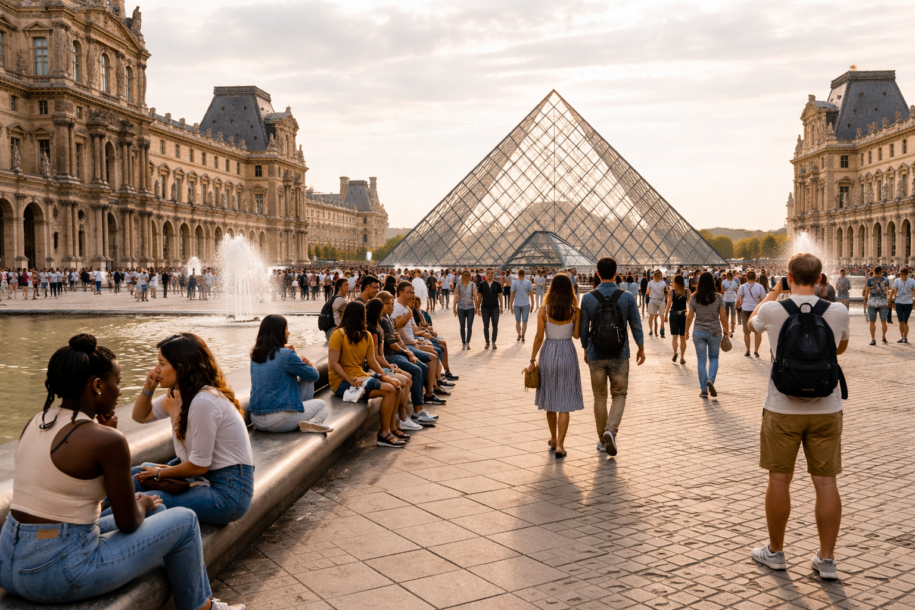
Two days in Paris is not about rushing from one landmark to another. It’s about understanding how the city flows — where to walk, where to stop, and where most people get it completely wrong.
⭐ Rated 4.98 / 10,000+ guests
Let’s start with something simple.
You don’t need more places in Paris. You need better decisions.
Because what ruins most trips here is not the city — it’s the way people move through it.
Too fast. Too scattered. Too much pressure to “see everything”.
This guide does the opposite.
It gives you a route that actually makes sense. One that feels natural. One that lets Paris reveal itself gradually.
Day 1 — The Walk That Explains Paris
Louvre → Tuileries → Champs-Élysées → Concorde → Seine → Eiffel Tower
Start your morning early. This matters more than you think.
The first stop is obvious — but how you approach it changes everything.
The Louvre.
You’ve seen it everywhere. You probably feel like you already know it.
You don’t.
If you want to go inside, do it properly.
Book a ticket in advance on the official website →
Visit the Louvre
Go early. Stay 60 to 90 minutes. Pick a few sections.
Do not try to see everything.
If you do, you’ll walk out tired, slightly annoyed, and already behind on your day.
And that’s how most people start their Paris trip.
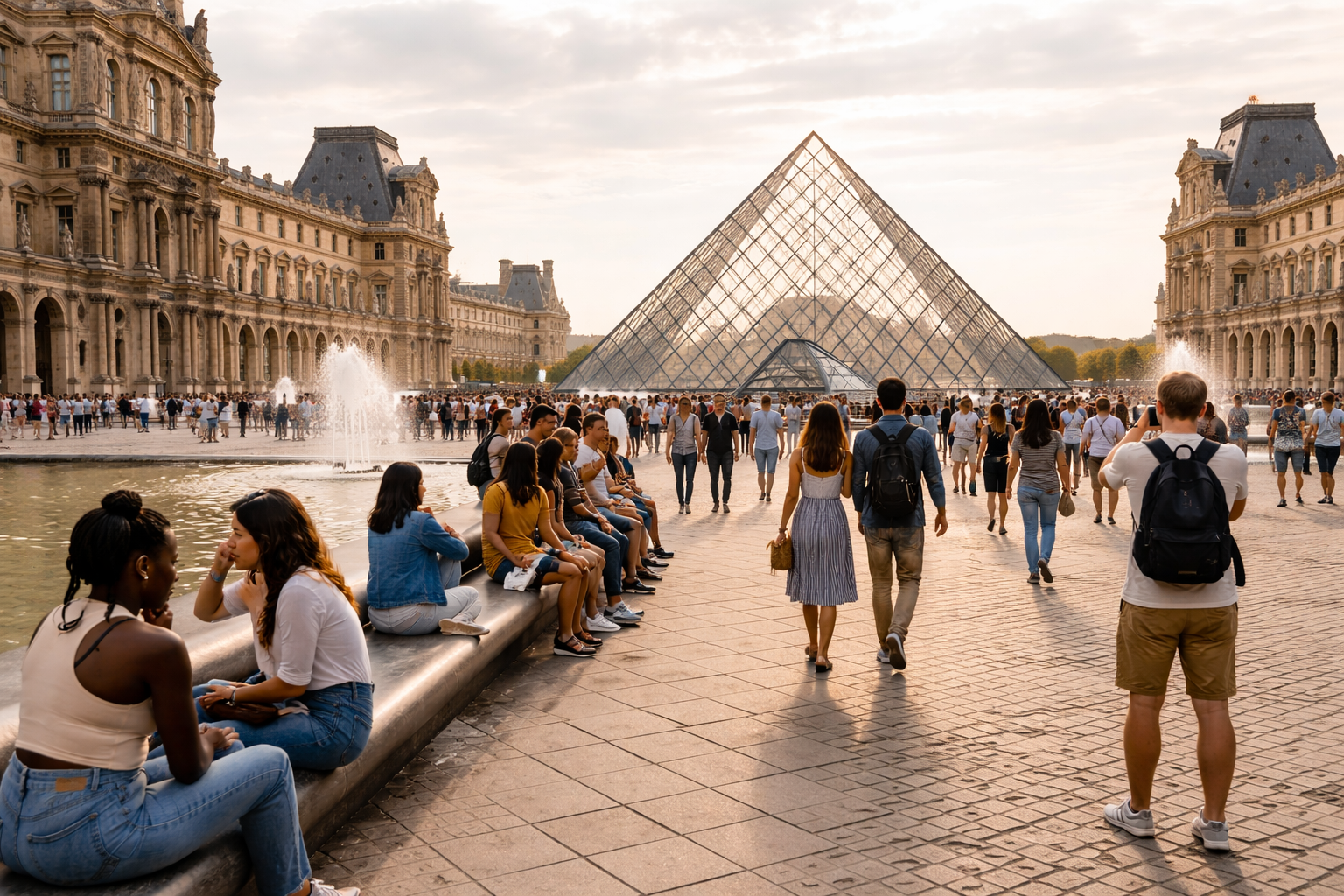
If museums are not your thing, skip the inside completely. The courtyard alone — the pyramid, the scale, the architecture — already gives you the experience.
And honestly? For many people, that’s enough.
Now here’s the part most itineraries miss.
What you do after the Louvre matters just as much as the Louvre itself.
Don’t rush to the next landmark.
Walk across the street to
Le Fumoir.
It’s right there. And yet most people skip it.
Inside, it’s quiet. Dim lighting. Wooden interiors. A completely different rhythm from the crowd outside.
This is your reset.
Order a coffee. Sit down. Let the morning slow down for 20 minutes.
Paris works better when you stop pushing it.
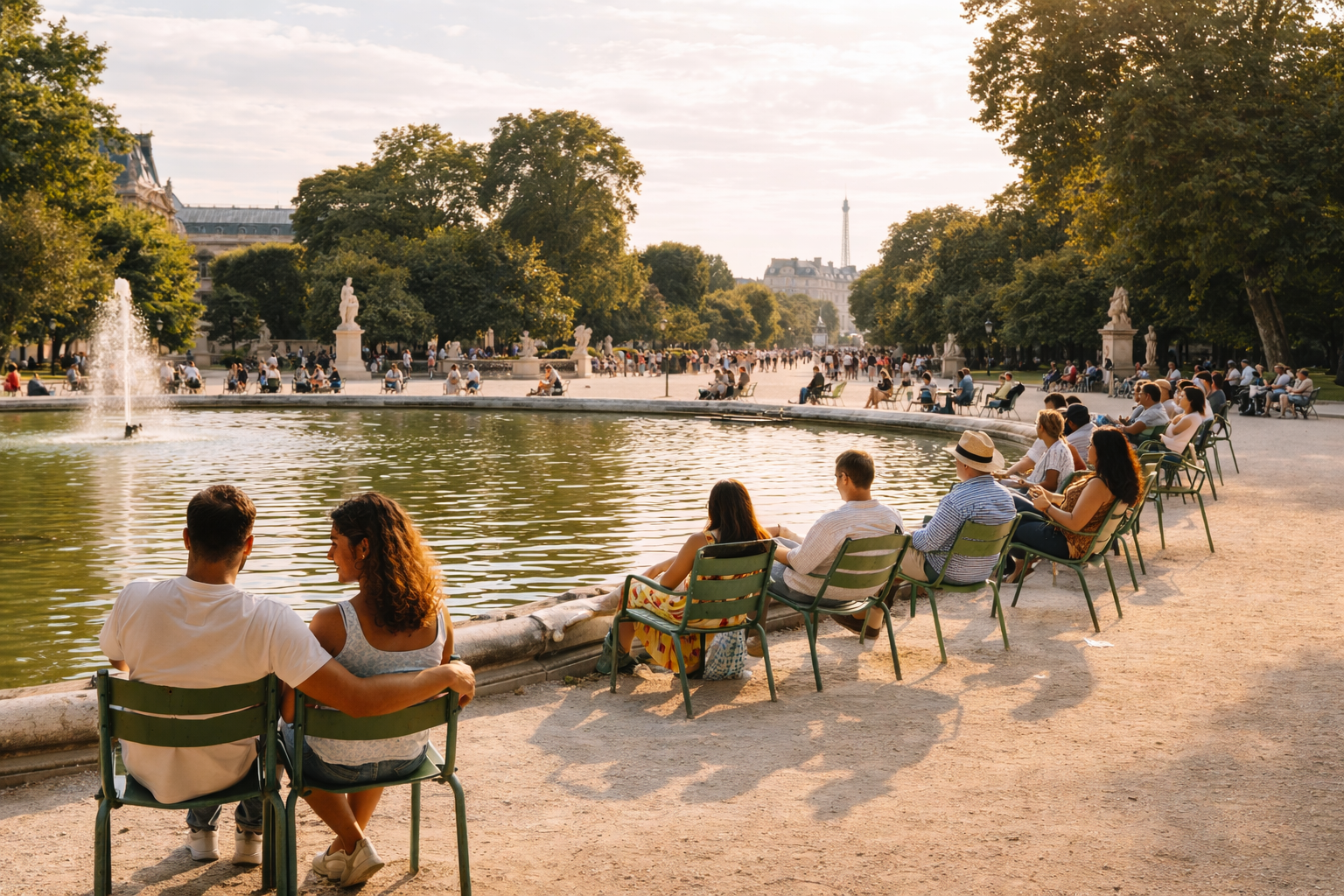
From there, walk into the Tuileries Garden.
No rush. No objective.
Just walk.
You’ll see locals sitting on green chairs, kids running, people doing absolutely nothing.
This is the first moment where Paris starts to feel real.
If you want something sweet, stop at
Angelina.
Yes, it’s known. Yes, it’s popular.
But at the right time, it still works.
Hot chocolate. Pastries. A short pause.
Nothing more.
The Part Everyone Gets Wrong: Champs-Élysées
Now we get to the interesting part.
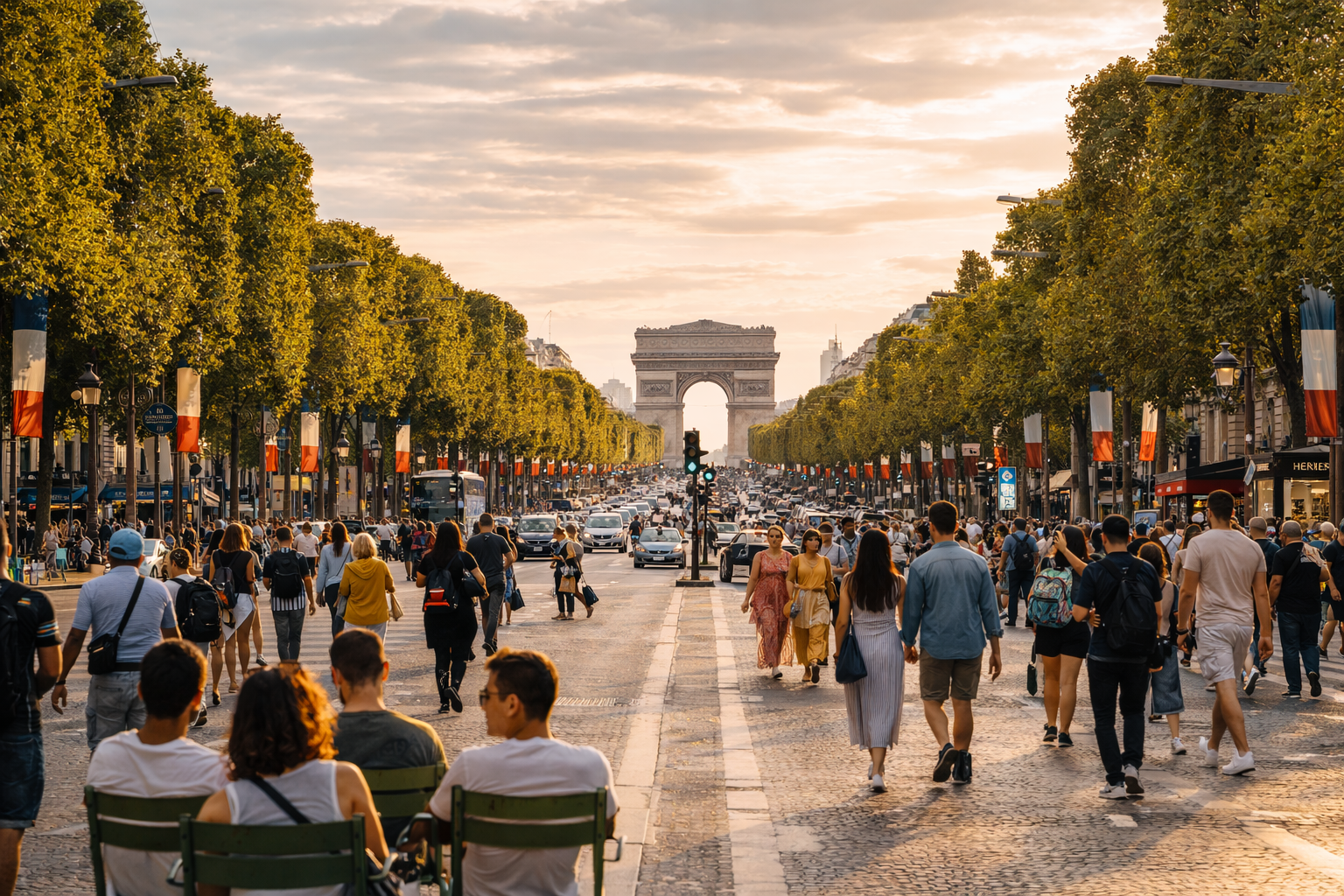
The Champs-Élysées.
Everyone walks it.
Almost no one experiences it properly.
Most people arrive here tired, distracted, and walk straight through it like it’s a shopping street.
That’s why it feels disappointing to so many visitors.
They never really see it.
Start from the Arc de Triomphe.
Take the metro there if needed.
Stand at the top of the avenue.
And just look.
The symmetry. The scale. The perspective.
This is one of the few places where Paris reveals its structure instantly.
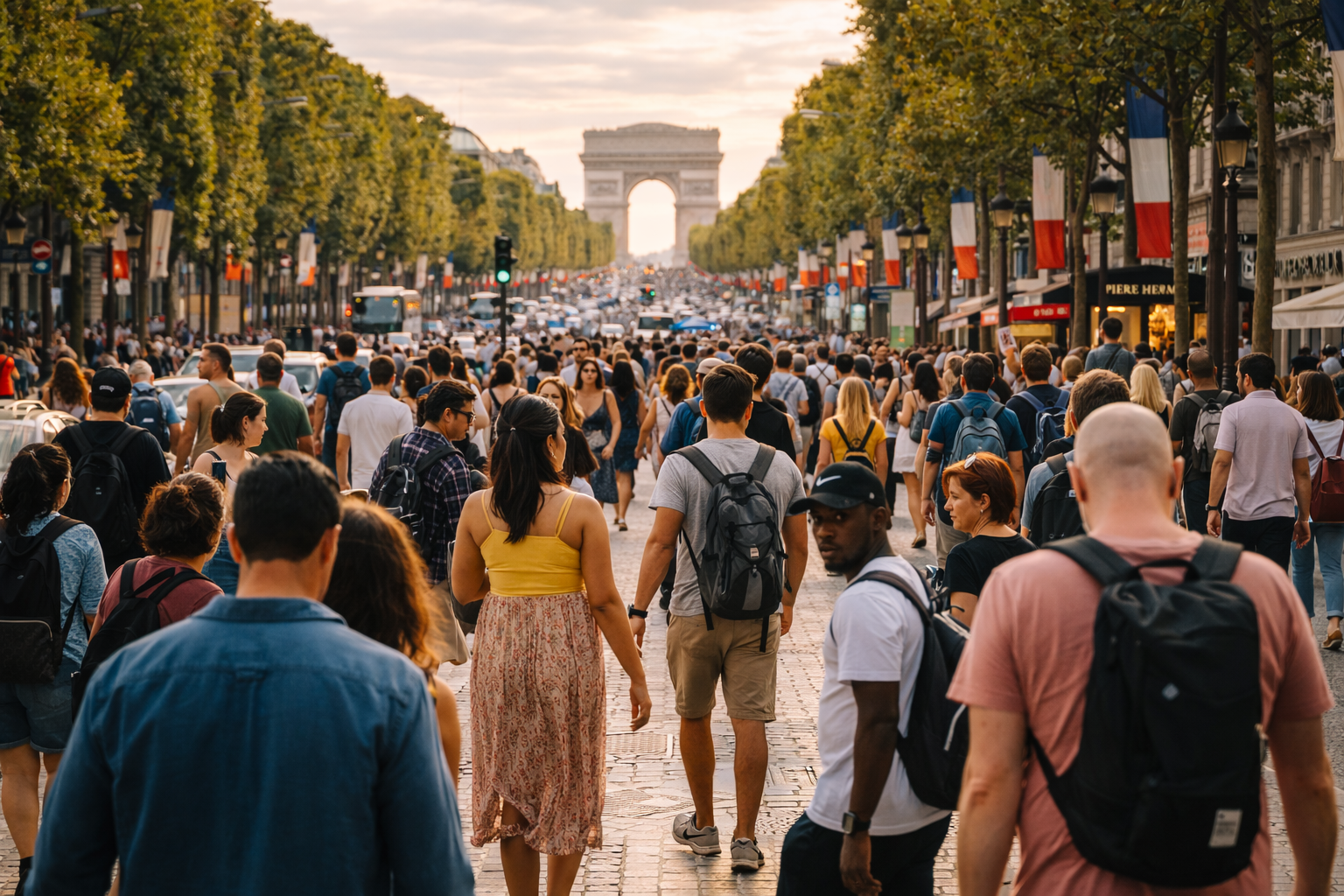
Now walk down.
Slowly.
Notice how the atmosphere changes as you move.
That’s the part most people miss.
Halfway down, stop at
Pierre Hermé (86 Champs).
This is where you try real macarons.
Not the random ones. Not the colorful tourist versions.
Take a few. Sit if you can. Slow down again.
For lunch — don’t stay on the avenue.
This is one of the easiest mistakes to avoid.
Walk just a few streets away.
Even 2 minutes is enough.
The difference is immediate.
Better food. Better atmosphere. Less pressure.
As you reach the end, you arrive at Place de la Concorde.
Wide. Open. Almost calm.
It feels like a pause after the intensity of the Champs-Élysées.
Most people walk through it without thinking.
Take 2 minutes here. Just stand still.
It changes how the place feels.
From there, head toward the Seine.
This is where everything softens.
The noise drops. The space opens.
You’re no longer “visiting”.
You’re just in Paris.
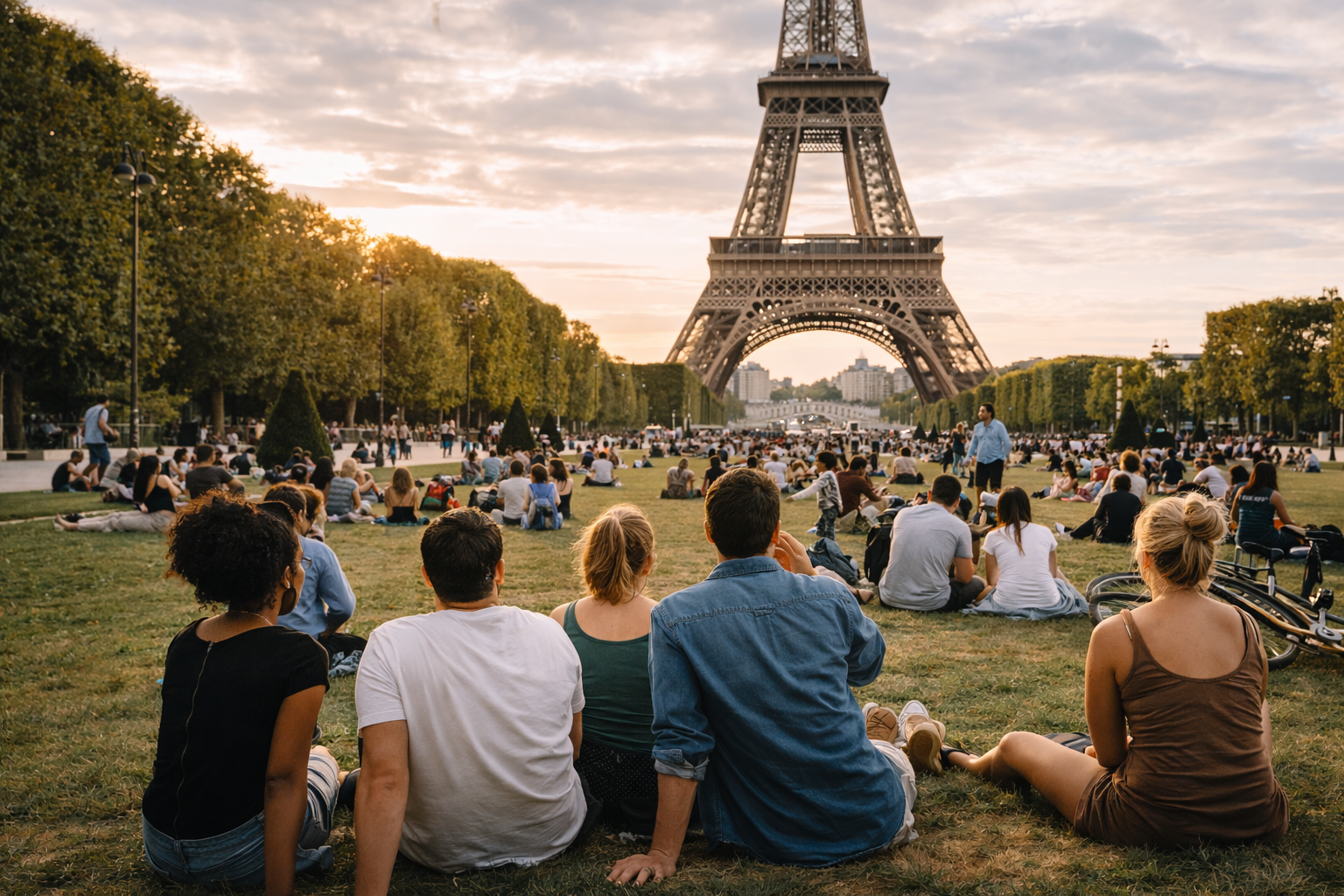
Walk toward the Eiffel Tower.
No rush. No pressure.
Stop when you want. Sit if you feel like it.
If going up matters to you, book in advance on the official website →
Visit the Eiffel Tower
If not, the experience from the ground is often better than people expect.
You’ve just crossed the city properly.
Day 2 — The Paris You Don’t Plan For
Montmartre → Café → Marais → Seine → Canal or wander
Day one gave you structure.
Day two should feel lighter.
Less planning. More intuition.
This is where most people finally relax — and where Paris starts to feel very different.
Start early again.
Not for efficiency this time — but for atmosphere.
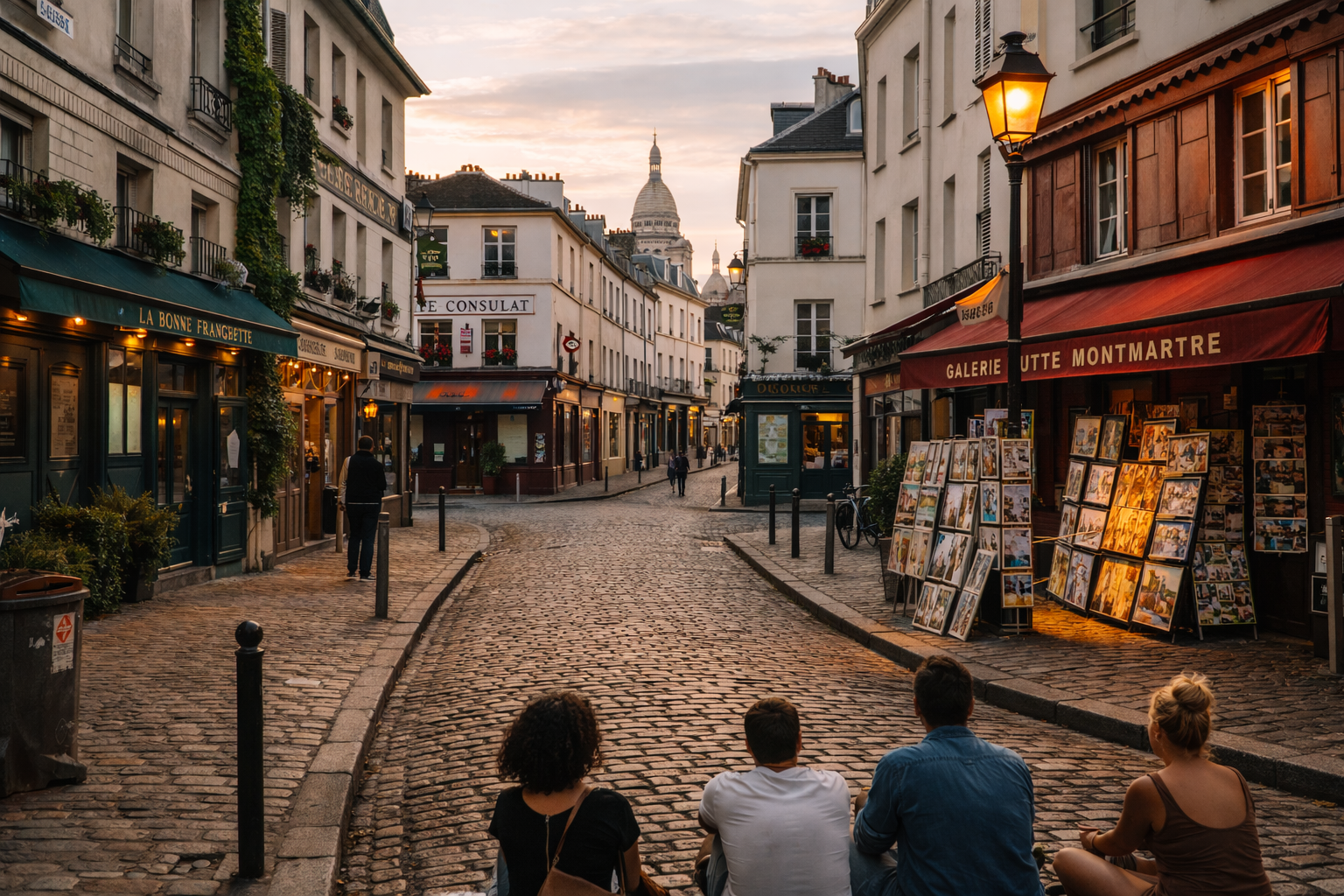
Head to Montmartre.
If you arrive late, it will feel crowded, noisy, and slightly disappointing.
If you arrive early, it feels like a different place entirely.
Walk uphill slowly.
Take the smaller streets.
Avoid the obvious paths leading directly to the main square.
If you feel like you’re in a crowd, you’re in the wrong spot.
Turn. Explore. Drift.
That’s how Montmartre works.
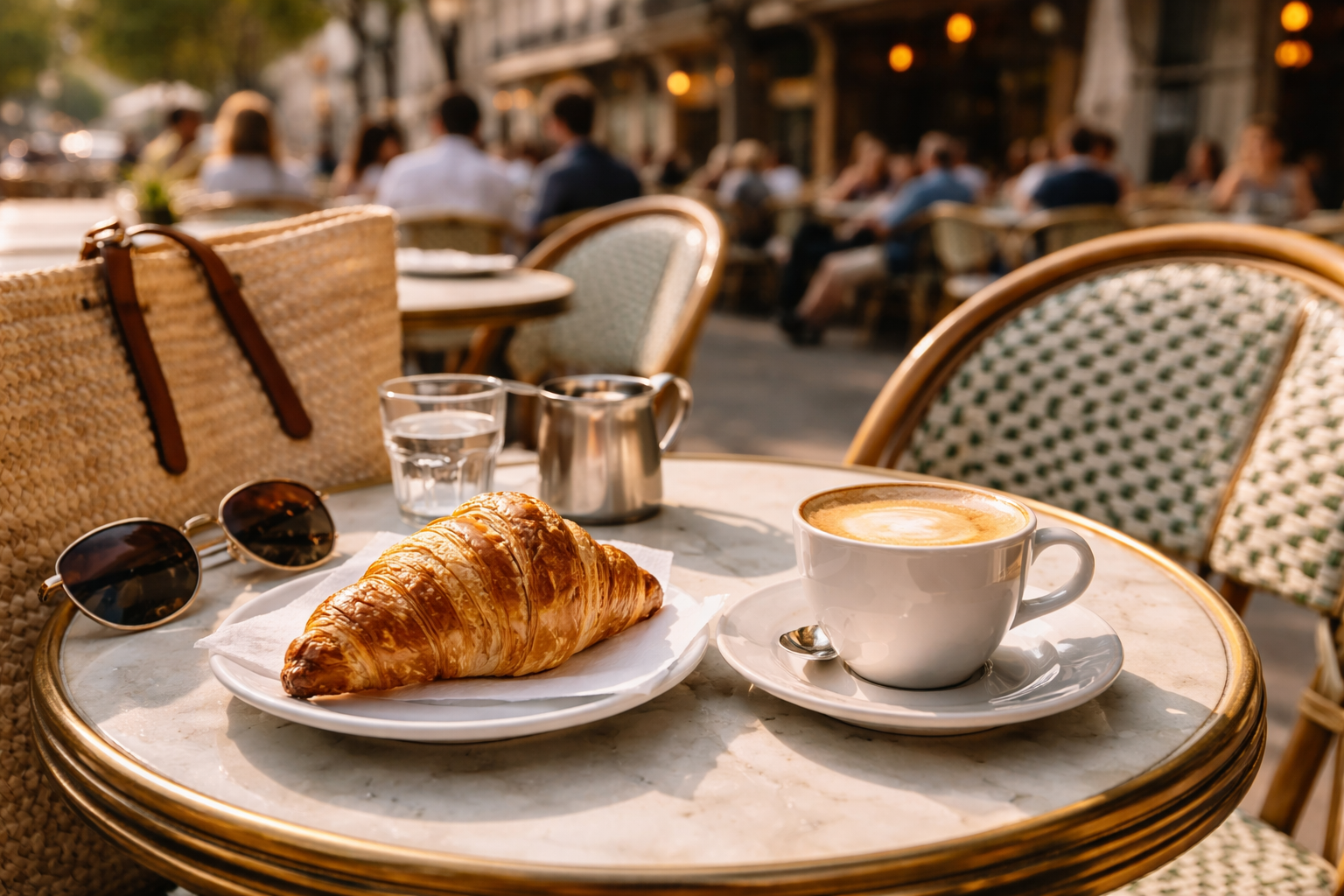
For a simple coffee stop, head to
Café des Deux Moulins.
Yes, it’s known from Amélie.
But early in the day, it still feels relaxed enough to enjoy.
Order something simple. Sit down.
Don’t rush this part.
If you prefer something more “classic Paris”, walk toward
Le Consulat.
It’s slightly postcard-like — but in the morning, it still works.
And sometimes, that’s exactly what you want.
Now comes an important moment.
This is where most people overplan.
They try to squeeze in one more museum, one more “must-see”, one more detour.
Don’t.
Walk down from Montmartre slowly.
No strict route. No fixed objective.
This is where Paris rewards you.
For lunch, head toward Le Marais.
This is one of the safest bets in Paris.
Good energy. Lively streets. Plenty of options.
And most importantly — it still feels balanced.
Simple rule: avoid places directly on the busiest corners. Walk one street further.
You’ll feel the difference immediately.
Less pressure. Better food. More space.
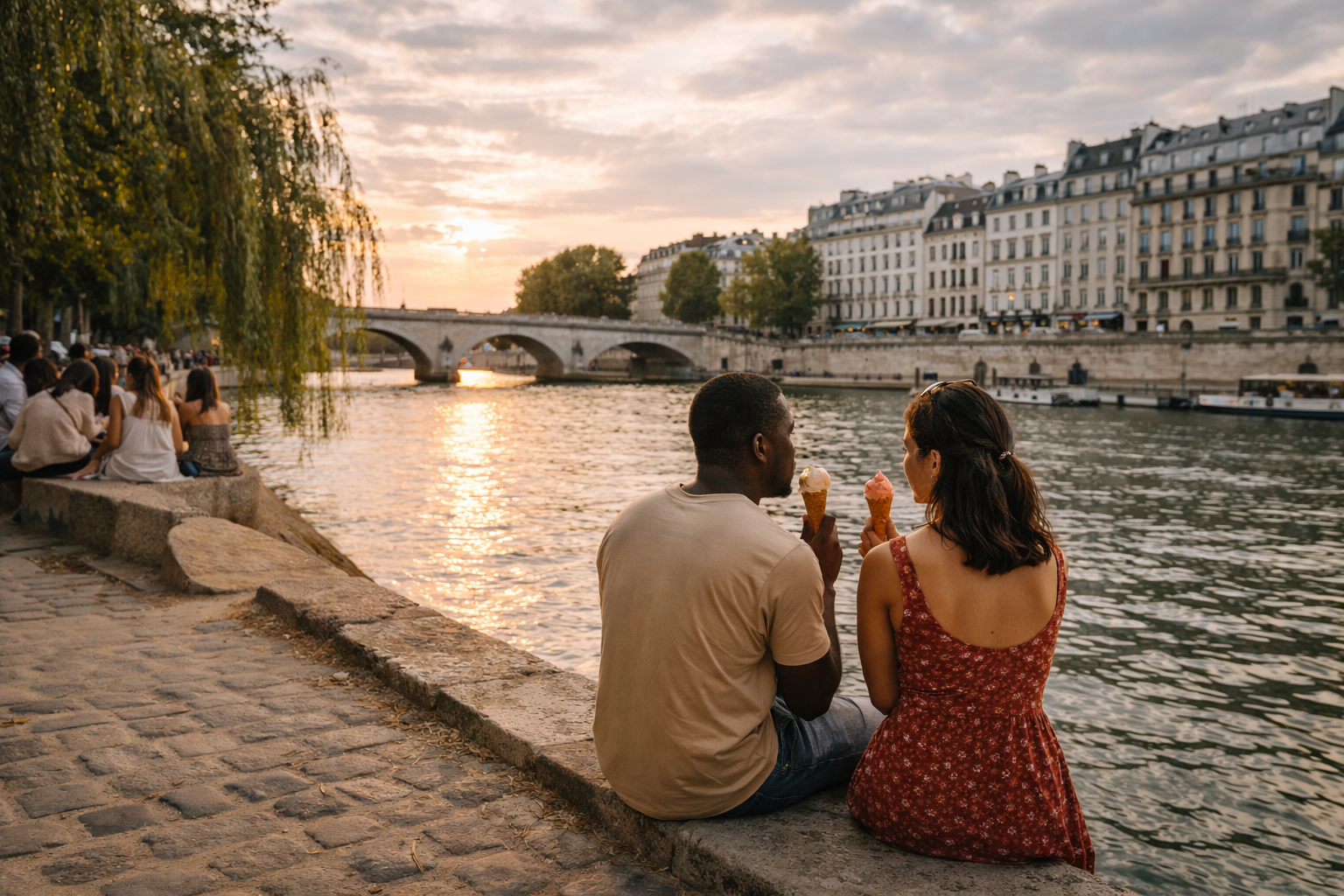
After lunch, take a small detour to
Berthillon on Île Saint-Louis.
This is where you go for ice cream in Paris.
It’s one of the few “famous” places that actually lives up to the expectation.
Get a cone. Walk along the Seine.
No need to complicate it.
This is one of those small moments people remember later.
Now you have a choice.
And this is where your trip becomes personal.
If you want something calm, head toward Canal Saint-Martin.
Walk along the water. Sit somewhere. Do nothing for a while.
If you prefer something more open, just wander.
Pick a direction. Follow it.
No map. No pressure.
At this point, you don’t need a plan anymore.
Getting Around — The Simple Version
The metro is excellent.
Fast. Cheap. Easy to use.
Use it when you need to cross the city.
But don’t rely on it too much.
Paris is a walking city.
The best parts happen between places.
Not just at them.
If something is within 20–25 minutes, walk.
You’ll understand the city much better.
And you’ll enjoy it more.
What to Eat — Keep It Simple
You don’t need a complicated food plan.
You just need to get a few things right.
- Croissant in the morning — from a real bakery, not a chain
- Light lunch — avoid heavy meals in the middle of the day
- Macarons — Pierre Hermé or similar quality
- Ice cream — Berthillon if you’re nearby
- Dinner — choose atmosphere over hype
Paris is not about finding “the best restaurant”.
It’s about consistency.
Get the basics right, and everything works.
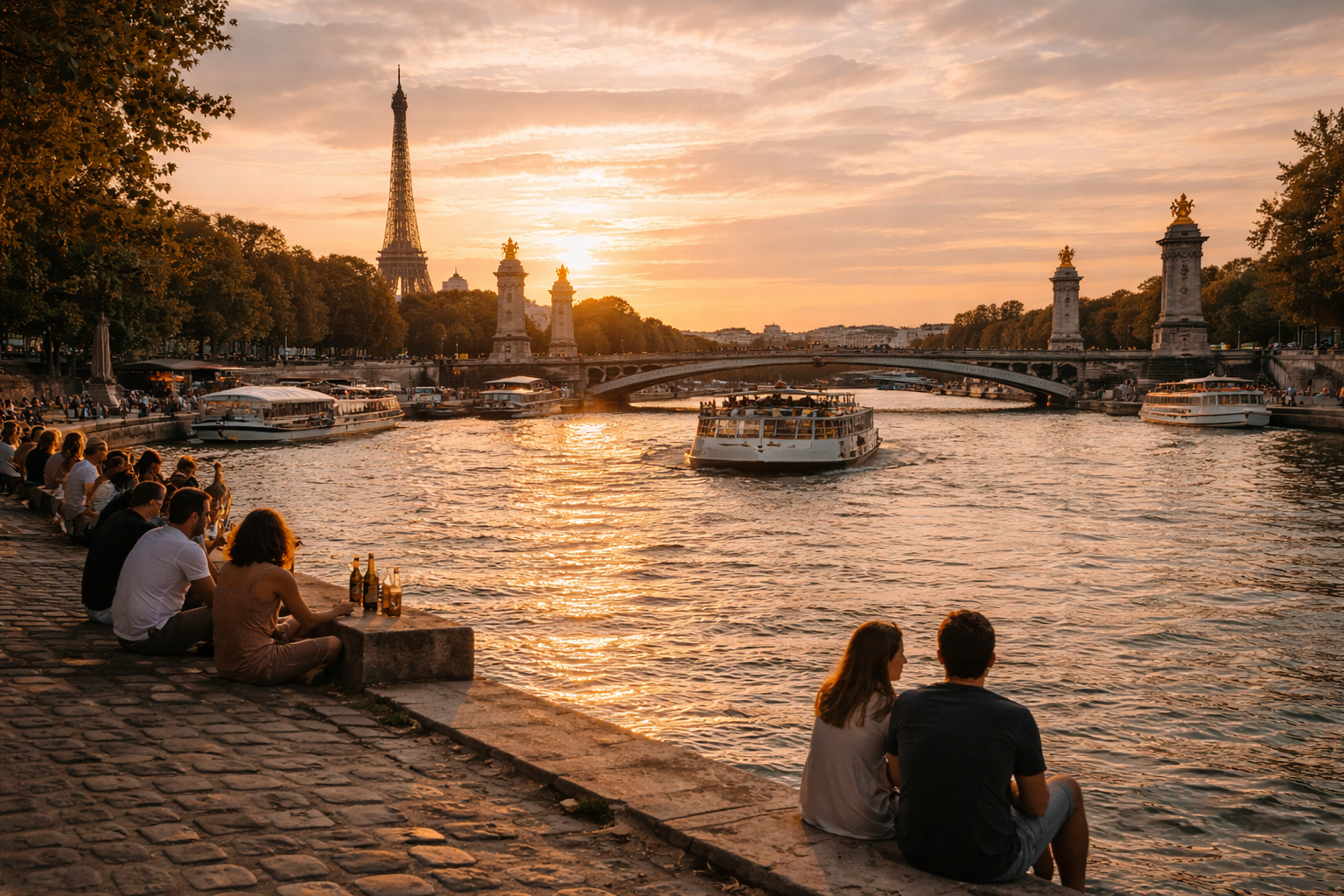
One Thing People Realize Too Late
By the end of your second day, something usually clicks.
The best moments were never the ones you rushed.
And the places that felt underwhelming were often the ones you didn’t fully understand.
The Champs-Élysées is a perfect example.
At first, it feels obvious.
Then slightly disappointing.
And then… interesting again, once you start noticing what’s really there.
That’s why some people go back to it differently.
Not to see more.
Just to see it better.
If that’s something you’re curious about, you can always
explore it with a local guide here.
Because the difference is rarely what you see. It’s what you notice.